Bread Machine, Stand Mixer or Countertop Oven?
Three appliances that all promise fresh bread, and only one of them makes it while you are asleep. A practical comparison of what each automates, what it cannot do, and how they combine.
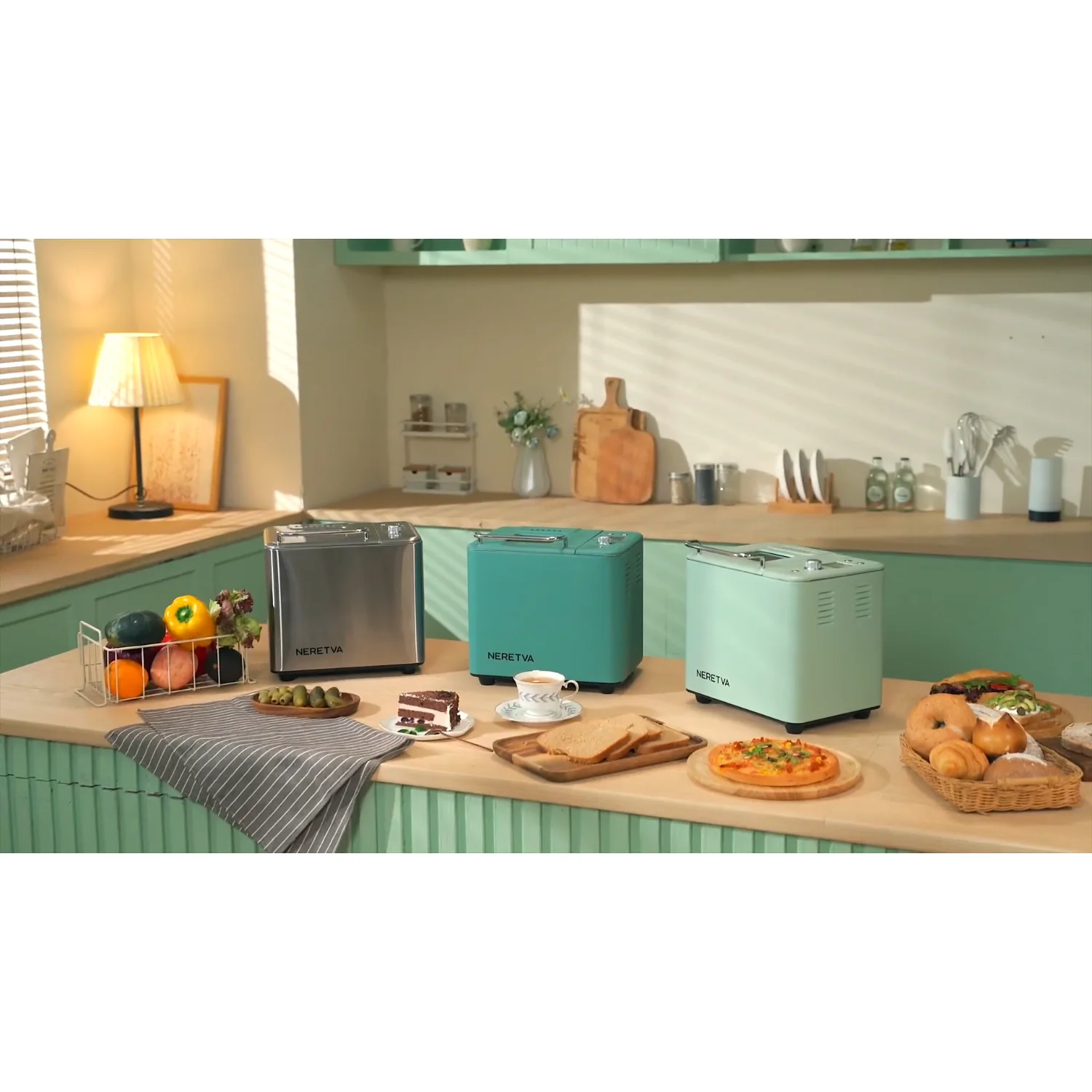
- What each machine automates
- The case for the bread machine
- The case for the stand mixer
- The case for the countertop oven
- The quiet economics: what each one costs to run
- Noise, space and the things nobody mentions in a spec sheet
- How they combine in a real week
- The part that decides how long any of this lasts
A kitchen has a finite amount of counter, and every appliance on it is a claim on that space that has to keep paying rent. Bread machines, stand mixers and countertop ovens overlap enough that people often buy the wrong one first, use it twice, and conclude that home baking is not for them. It usually was; the machine just automated a different part of the job than the one they wanted automated.
So there is no ranking here, only what each of the three actually takes off your hands, what it still leaves you holding, and which combinations make sense in a real week.
What each machine automates
A bread machine automates the whole sequence: knead, rise, knock back, second rise, bake. You measure ingredients into a pan, press a button, and come back to a finished loaf. The trade is that the loaf is the shape of the pan, and the process is opaque: you cannot shape it, score it, or bake it on a stone.
A stand mixer automates the knead only, and it automates it better than a bread machine does, with more power and a bowl you can see into. Everything else stays yours: proving, shaping, proving again, scoring, and a hot oven. That is more work and much more control, and it is the only route to a boule, a baguette, a tin loaf with a shaped top, or anything sourdough.
A countertop oven automates nothing about bread. What it does is give you a small, fast, cheap to run oven for everything else: the tray of vegetables, the reheated slice, the wings, the eight inch pizza. It earns its place by replacing a toaster and an air fryer and by keeping the full sized oven turned off.
| Bread machine | Stand mixer | Countertop oven | |
|---|---|---|---|
| Hands-on time for a loaf | About 5 minutes | About 25 minutes, spread over 4 hours | Not applicable |
| Can it run overnight | Yes, on the delay timer | No | No |
| Loaf shape | Fixed to the pan | Anything you can shape | Anything, if you shape and prove elsewhere |
| Sourdough | Dough cycle only, then bake elsewhere | Yes, the usual route | Yes, as the oven |
| Batch size | One loaf, 2 to 3.3 lb | About 1600 g of dough, so two loaves | One small tray |
| Also does | Jam, yoghurt, dough, cake | Whipping, creaming, cake batter | Toast, air fry, dehydrate, broil |
| Realistic weekly use | Two to four loaves, unattended | Weekend baking and cakes | Most days |
The case for the bread machine
The bread machine wins on one axis so decisively that it makes the others look slow: unattended time. Five minutes of measuring at eleven at night produces a loaf at seven in the morning, and no other route to bread does that. If the reason you want to bake is that you would like good bread in the house on a Tuesday, this is the machine, and the rest of this article is theoretical.
It is also the machine that most reliably converts people who do not think of themselves as bakers, because the failure modes are few and diagnosable. Our guide to How to Get a Better Loaf From a Bread Machine covers the handful of variables that decide the loaf, and there are genuinely only about six of them.
What it will not do is anything requiring a shaped dough or a hot open oven. There is a dough only cycle for exactly that reason: let the machine knead and prove, take the dough out, shape it, and bake it in a real oven. Plenty of households use their machine that way at weekends and on the full automatic cycle midweek.
The case for the stand mixer
A mixer is the right first appliance if what you want is to bake, in the broader sense, rather than to have bread. It kneads better than a bread machine because it has more power and a hook designed for the job, and it does everything else a bowl and a wooden spoon do, faster: creaming butter and sugar, whipping cream and egg whites, mixing cake batter, and shredding cooked chicken if you have found that trick.
Two specifications on a mixer are worth reading properly. The first is dough capacity rather than bowl volume: a 6.34 quart bowl that takes about 1600 grams of dough is two standard loaves in one go, and that is the number that decides whether a double batch of sourdough is one session or two. The second is the motor. AC motors are cheap and get hot and loud under load; a DC motor stays cooler and quieter through a ten minute knead, which is when the difference shows up.
The third thing is not on the spec sheet at all: whether the machine stays where you put it. A mixer walking toward the counter edge under a stiff dough is the classic complaint, and the fix is mass at the bottom. Ours has a load bearing block in the base for that reason. It is honest to say that a very stiff double batch will still make any tilt head mixer in this class work hard.
The case for the countertop oven
The countertop oven is the appliance people underestimate, because it looks like a toaster and is priced like one. What it actually replaces is the habit of heating a full sized oven, which takes fifteen minutes and a lot of electricity, in order to cook something that occupies a quarter of one shelf.
Twenty one quarts takes an eight inch pizza, a small tray bake, five slices of toast, or a basket of wings. The convection fan is what makes it fast: moving air transfers heat far more efficiently than still air, which cuts baking time by roughly half against a conventional oven and gives the air fry function its crisp with up to ninety percent less oil than deep frying.
For a bread baker specifically it plays a supporting role rather than a lead. It is too small for a full loaf on a stone, but it is the machine that toasts the result, warms rolls, and reheats a slice of yesterday's focaccia without turning the kitchen into an oven.
The quiet economics: what each one costs to run
Purchase price is the number people compare, and running cost is the number that decides how often a machine actually gets used. The arithmetic is simple enough to do on the back of an envelope, and it goes in a direction most people do not expect.
A full sized oven typically draws somewhere between 2 and 5 kW while its element is on, and it spends fifteen minutes of that just getting up to temperature with nothing inside it. A 21 quart countertop oven draws 1500 W, preheats in about three minutes because there is a fraction of the air to heat, and finishes faster again because a convection fan moves heat into food more efficiently than still air does. For anything that fits, the countertop oven is not a compromise; it is the cheaper and faster machine.
A bread machine is more surprising still. It runs for three to four hours, which sounds expensive, but the elements are only on intermittently and total around 550 to 800 W when they are. A loaf works out at a few pennies of electricity, against a supermarket loaf that costs a few dollars and contains whatever the supermarket decided it should contain. The machine pays for itself somewhere between the fortieth and the sixtieth loaf, which for a household that bakes twice a week is well inside the first year.
The mixer barely registers. It runs for ten minutes at 400 W, which is less energy than boiling a kettle twice. Its cost is counter space, not electricity.
| Power draw | Typical session | What it replaces | |
|---|---|---|---|
| Bread machine | 550 to 800 W, intermittent | 3 to 4 hours, unattended | A bought loaf, twice a week |
| Stand mixer | 400 W | 10 minutes under load | Ten minutes of kneading by hand |
| Countertop oven | 1500 W | 15 to 40 minutes | A full oven at 2 to 5 kW, plus a toaster and an air fryer |
| Full sized oven | 2 to 5 kW | 15 minute preheat, then the bake | Nothing. It is what the others save you from heating |
Noise, space and the things nobody mentions in a spec sheet
Three practical facts decide whether an appliance stays on the counter or migrates to a cupboard and then to a loft, and none of them appear on the box.
The first is noise, and it matters most for the machine that runs longest. A bread machine kneads for ten to twenty minutes at a time, usually while somebody is in the room, and a loud one becomes a machine you only run when the house is empty. That is why the motor rating on our larger machines is quoted as a silent motor: it is not marketing, it is the difference between a machine that works overnight and one that wakes people up. Mixers are the opposite case: loud but brief, and an AC motor under a stiff dough is genuinely unpleasant where a DC motor at the same load is merely audible.
The second is height. Almost every countertop appliance is measured for its footprint, and almost every kitchen has wall cabinets at around eighteen inches above the counter. A bread machine with a lid that hinges upward needs clearance to open, not just to sit, and a countertop oven needs air above it. Measure the gap under the cabinet before you measure the counter.
The third is cleaning, which is really a question of what comes apart. A bread machine pan lifts out and washes in the sink; a countertop oven has a removable crumb tray and racks that go in the sink; a mixer bowl and attachments come off entirely. Anything that cannot be taken apart gets wiped instead of washed, and gets wiped less often as the months pass. It is worth checking what detaches before buying rather than after.
How they combine in a real week
Very few kitchens need all three, and the ones that have all three usually acquired them in a particular order. These are the three patterns we see most often.
| If your week looks like this | Start with | Add later |
|---|---|---|
| Two working adults, bread eaten daily, no weekend baking | Bread machine, 2 lb | A countertop oven for everything else |
| Family of four or more, weekend baking, cakes and cookies | Stand mixer | A 3.3 lb bread machine for weekday loaves |
| Small kitchen, cooking for one or two, little baking | Countertop oven | The 2 lb bread machine if bread becomes a habit |
The pattern underneath all three is the same. Buy the machine that automates the part of the job you actually resent doing. If what you resent is the four hours of attention, buy the bread machine. If what you resent is ten minutes of kneading and nothing else, buy the mixer. If what you resent is heating a large oven to cook a small thing, buy the countertop oven.
The part that decides how long any of this lasts
Small appliances rarely die of motor failure. They are retired because a consumable wore out and could not be replaced: a pan whose coating went, a paddle that stopped gripping, a portafilter basket that got lost in a move. That is a supply problem rather than an engineering one, and it is the reason we keep parts for machines sold years ago.
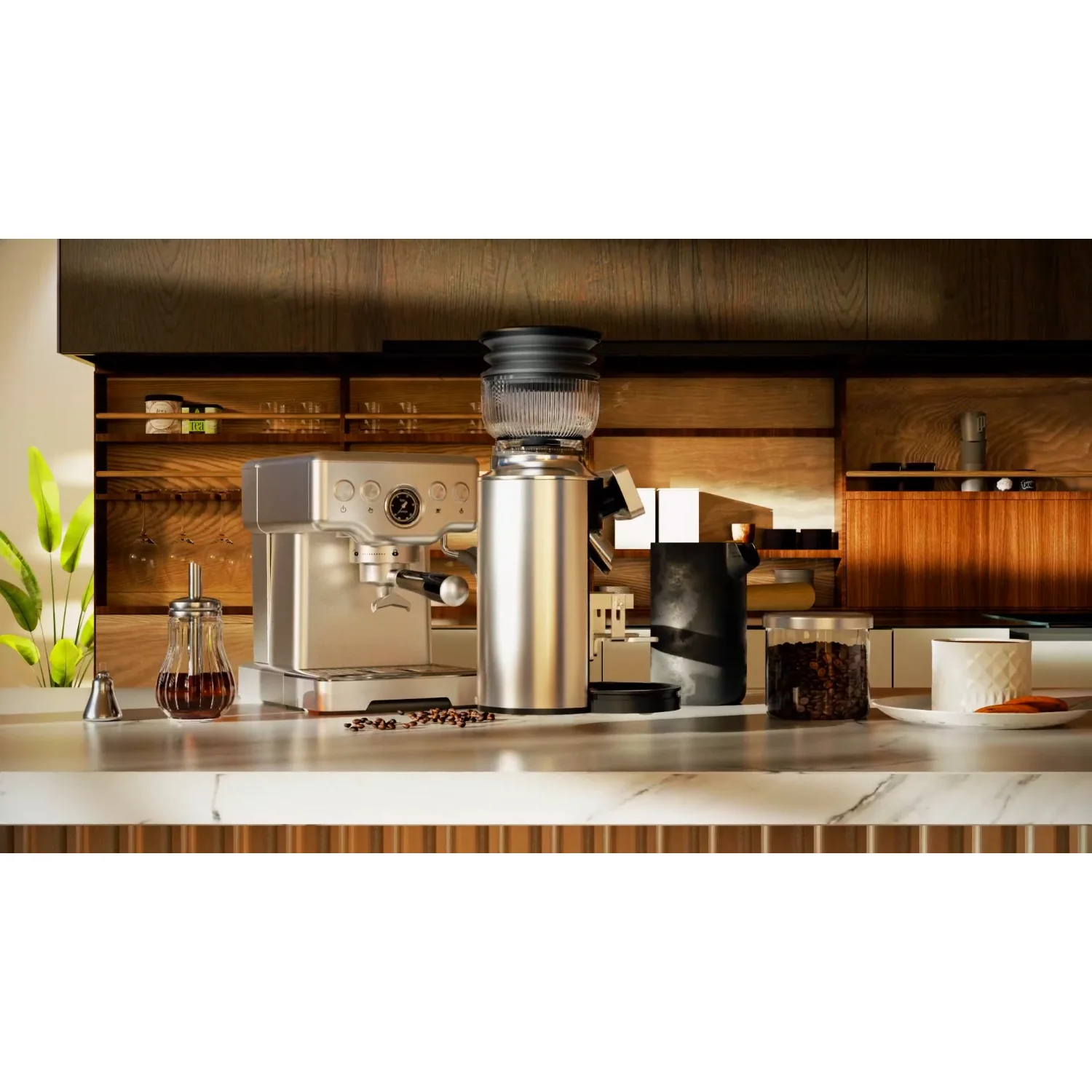
Bread pans and kneading paddles are model specific, because the paddle shaft, pan footprint and locking notch differ between the PE8866, PE9706U and PE9806U bodies. Every page on bread machine parts names the models it fits, so the match is a reading exercise rather than a gamble. On the coffee side, espresso accessories covers 51 and 58 mm portafilters, frothing pitchers and replacement steam wands.
A five year old machine with a fresh pan and a new paddle is a working machine, and that is the least glamorous and most useful thing we can say about any of this. The full range, from the smallest loaf to the 58 mm espresso build, is on the Neretva catalogue, and the two companion guides are How to Get a Better Loaf From a Bread Machine and Espresso at Home: Pressure, Grind and Milk.